
- /
- Destinations
- Bikaner Travel Guide
Bikaner Travel Guide
Bikaner Travel Guide, Tourist Attractions & Tours
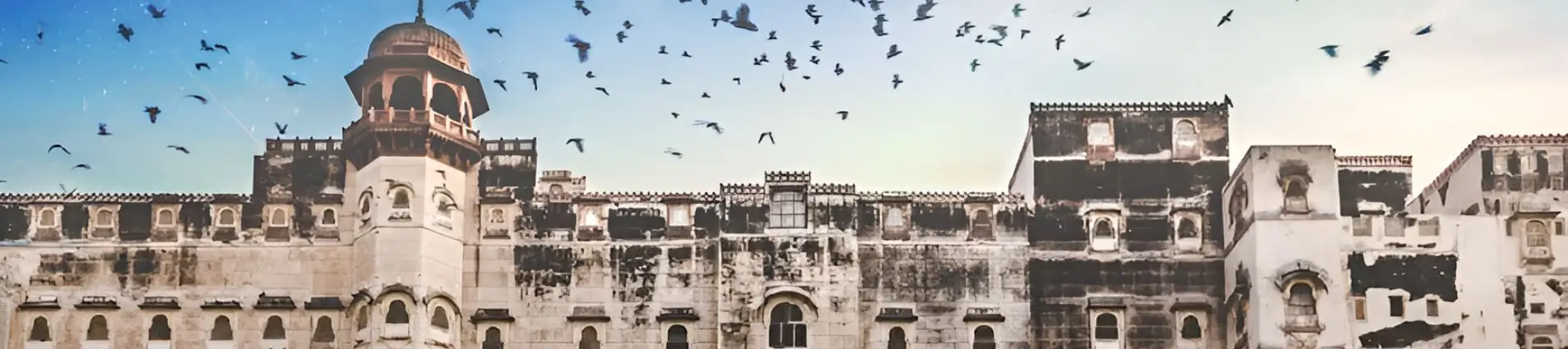
Bikaner stands on the edge of the Thar Desert in north-western Rajasthan and is one of the state's most historically significant royal cities. Founded in 1488 by Rao Bika, a Rathore prince and son of Rao Jodha of Jodhpur, the city developed into an important trading centre connecting northern India with Central Asia through ancient caravan routes. Its strategic location helped Bikaner flourish as a prosperous kingdom, leaving behind magnificent forts, richly decorated palaces, temples and merchant havelis that continue to preserve the legacy of the former Bikaner State.
Unlike many desert cities that rely primarily on hilltop fortresses, Bikaner's most impressive monument, Junagarh Fort, was constructed on the plains rather than atop a hill. This architectural distinction, combined with its remarkably well-preserved palaces, museums and courtyards, makes Bikaner one of Rajasthan's most rewarding destinations for travellers interested in royal history and architecture. The city's narrow streets, vibrant bazaars and beautifully carved sandstone buildings continue to reflect centuries of Rajput craftsmanship.
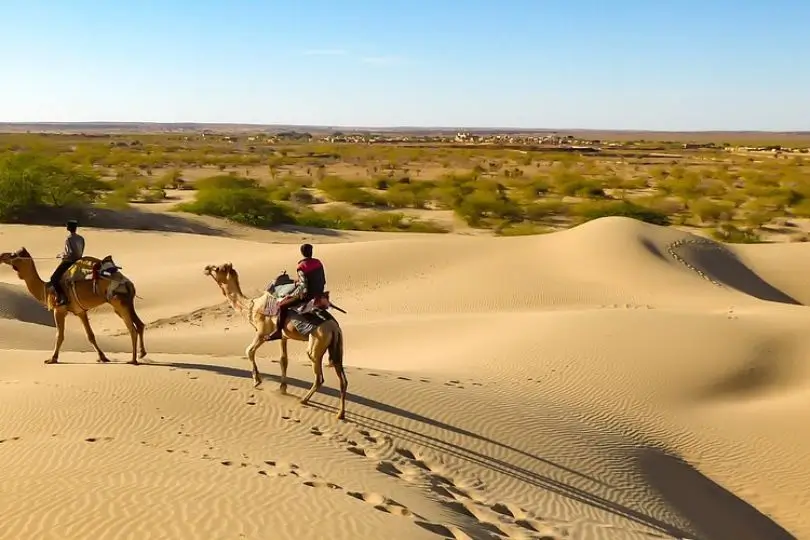
Bikaner has long been associated with camel breeding and desert traditions. The city is home to the internationally recognised National Research Centre on Camel, where visitors can learn about Rajasthan's iconic desert animal while observing different camel breeds. Colourful festivals, folk music, traditional handicrafts and authentic Marwari hospitality further contribute to the city's distinctive cultural identity. The annual Bikaner Camel Festival attracts visitors from across the world and celebrates the importance of camels in the history and daily life of the Thar Desert.
The city is equally known for its artistic heritage. Skilled craftsmen continue to produce miniature paintings, lacquer work, embroidered textiles, leather products and traditional sweets using methods that have been preserved for generations. Bikaner's bustling markets provide excellent opportunities to purchase authentic Rajasthani handicrafts while experiencing the rhythm of everyday life in one of Rajasthan's oldest trading cities.
Luxury heritage hotels housed within former royal palaces and noble residences provide visitors with an opportunity to experience the elegance of Rajasthan's princely era alongside modern comforts. Whether exploring magnificent forts, visiting sacred temples, discovering desert traditions or enjoying authentic regional cuisine, Bikaner offers a quieter yet equally fascinating alternative to Rajasthan's more heavily visited cities and remains an essential destination for travellers exploring the royal heritage of northern India.
Related Tours
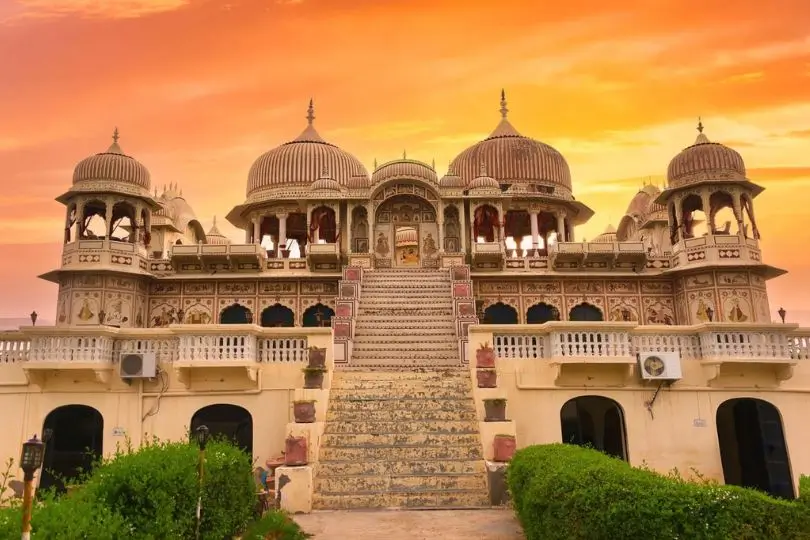 11 Nights / 12 Days
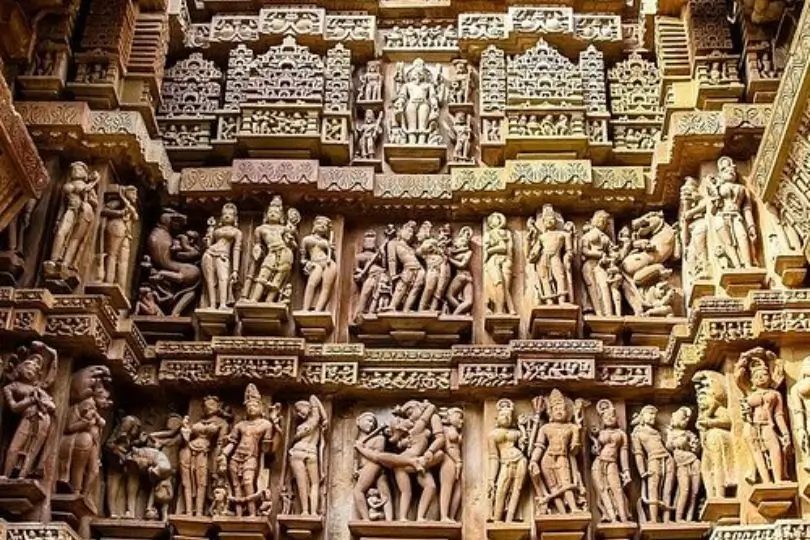 19 Nights / 20 days
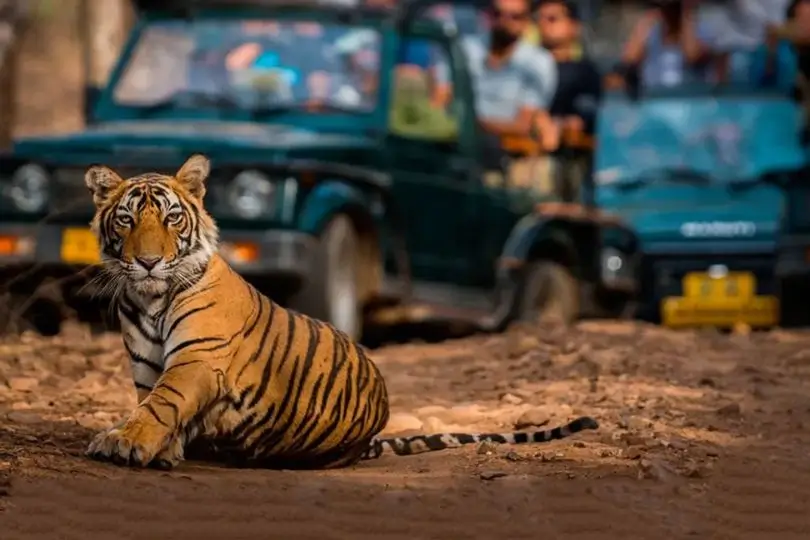 09 Nights / 10 Days
 10 Nights / 11 Days
Major Tourist Spots in Bikaner Travel Guide
Junagarh Fort
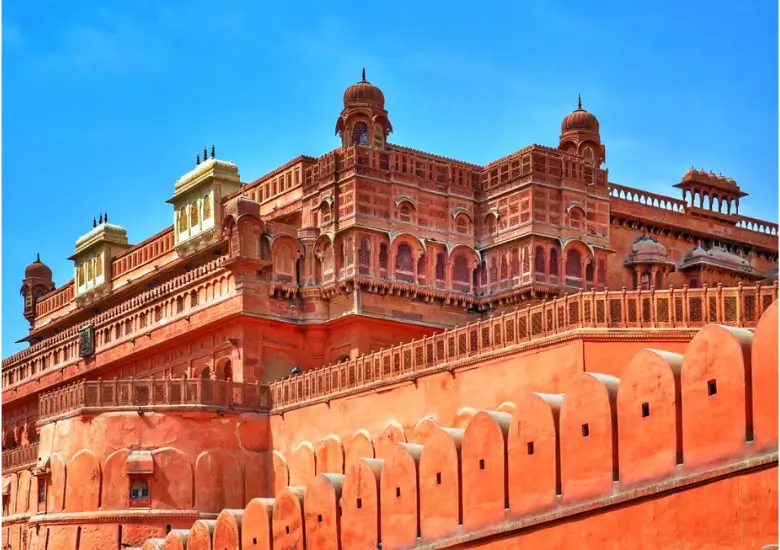
Junagarh Fort is Bikaner's most important historical landmark and one of Rajasthan's finest fortresses. Unlike most of the state's famous forts, Junagarh was built on the plains rather than on a hill, making its successful defence throughout history even more remarkable. Construction began in 1589 under Raja Rai Singh, one of Emperor Akbar's most trusted generals, and the fort was expanded over the following centuries by successive rulers of the Bikaner Kingdom. The result is an extraordinary complex of palaces, courtyards, temples and museums that reflects more than four hundred years of royal history.
Inside the fort, visitors can explore magnificent palaces including Anup Mahal, Karan Mahal, Phool Mahal, Badal Mahal and Chandra Mahal, each displaying intricate mirror work, gold leaf decoration, painted ceilings, marble carvings and beautifully crafted balconies. The fort museum preserves an impressive collection of royal weapons, manuscripts, miniature paintings, ceremonial costumes, palanquins and historical artefacts that illustrate the lifestyle of the Bikaner royal family.
Junagarh Fort remains one of the best-preserved forts in India and offers an immersive journey through Rajasthan's architectural and cultural heritage. Its richly decorated interiors and fascinating museums make it an essential attraction for every visitor to Bikaner.
Opening Hours: Daily, 10:00 AM – 4:30 PM.
Lalgarh Palace
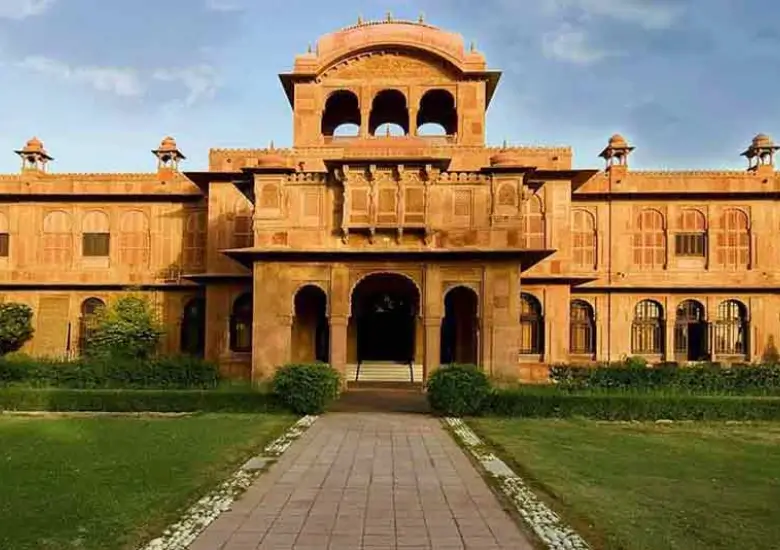
Lalgarh Palace is one of Bikaner's most elegant royal residences and a remarkable example of Indo-Saracenic architecture. Built between 1902 and 1926 by Maharaja Ganga Singh in memory of his father, Maharaja Lal Singh, the palace combines Rajput, Mughal and European architectural influences. Constructed from distinctive red sandstone, its beautifully carved façades, elegant balconies and landscaped gardens create one of the city's most impressive heritage landmarks.
Today, the palace serves multiple purposes. A section continues to be occupied by the former royal family, another operates as the luxurious Lallgarh Palace Hotel, while the remainder houses the Sadul Museum, displaying royal photographs, hunting trophies, manuscripts and historical artefacts connected with the Bikaner royal family. Visitors can admire the palace's richly decorated interiors while learning about the city's royal legacy.
Lalgarh Palace remains one of Rajasthan's finest heritage properties and provides an excellent introduction to the elegance and lifestyle of Bikaner's former rulers.
Museum Opening Hours: Daily, 10:00 AM – 5:00 PM.
Karni Mata Temple (Rat Temple)
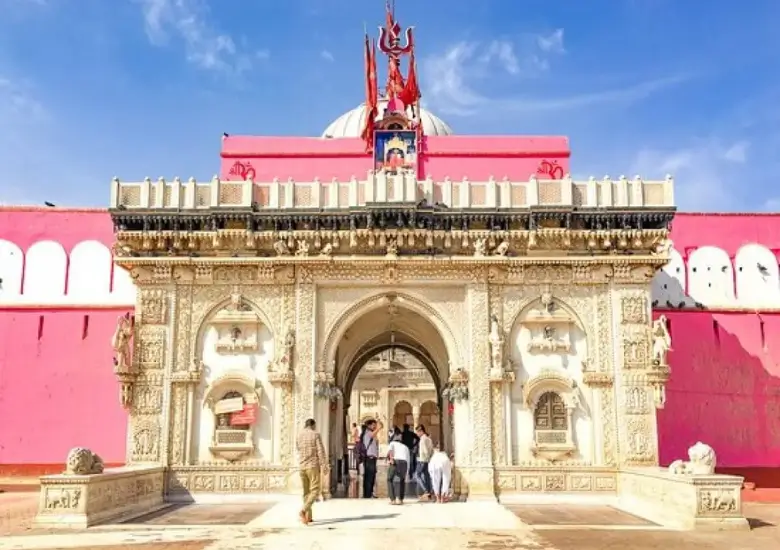
Located in the town of Deshnoke, around 30 kilometres from Bikaner, Karni Mata Temple is one of India's most unusual and internationally recognised religious sites. The temple is dedicated to Karni Mata, a revered Hindu saint believed by devotees to be an incarnation of Goddess Durga. It is famous for the thousands of sacred rats, locally known as kabas, that live freely within the temple and are regarded as holy by worshippers.
According to local belief, these rats represent the reincarnated souls of Karni Mata's followers and are carefully protected and fed by devotees. Spotting one of the rare white rats is considered especially auspicious and is believed to bring good fortune. Visitors are required to remove their shoes before entering the temple and are encouraged to respect the customs observed by pilgrims.
Despite its unusual reputation, the temple is admired for its beautifully carved marble entrance, silver doors and peaceful spiritual atmosphere. It remains one of Rajasthan's most distinctive religious landmarks and attracts visitors from around the world.
Opening Hours: Daily, approximately 4:00 AM – 10:00 PM.
National Research Centre on Camel
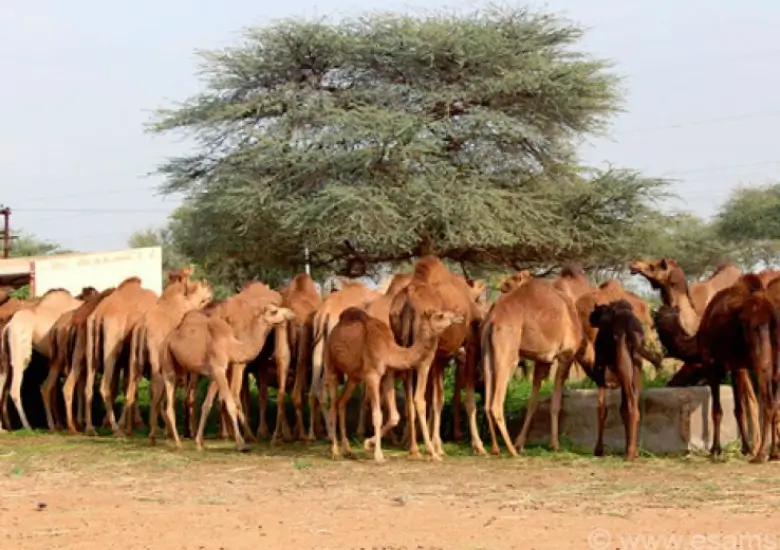
The National Research Centre on Camel is one of Bikaner's most unique attractions and the only institution of its kind in Asia dedicated to the conservation, breeding and scientific study of camels. Established by the Indian Council of Agricultural Research (ICAR), the centre plays an important role in preserving different camel breeds while promoting awareness of their historical significance in Rajasthan's desert communities.
Visitors can observe various camel breeds, learn about their behaviour and understand how these remarkable animals have supported transportation, agriculture and trade across the Thar Desert for centuries. The centre also features an informative museum, landscaped grounds and a dairy where visitors can sample camel milk products, including ice cream, flavoured milk and traditional sweets.
For families and international travellers, the camel research centre provides an educational and enjoyable experience that highlights one of Rajasthan's most iconic symbols.
Opening Hours: Daily, 2:00 PM – 6:00 PM (timings may vary seasonally).
Rampuria Havelis
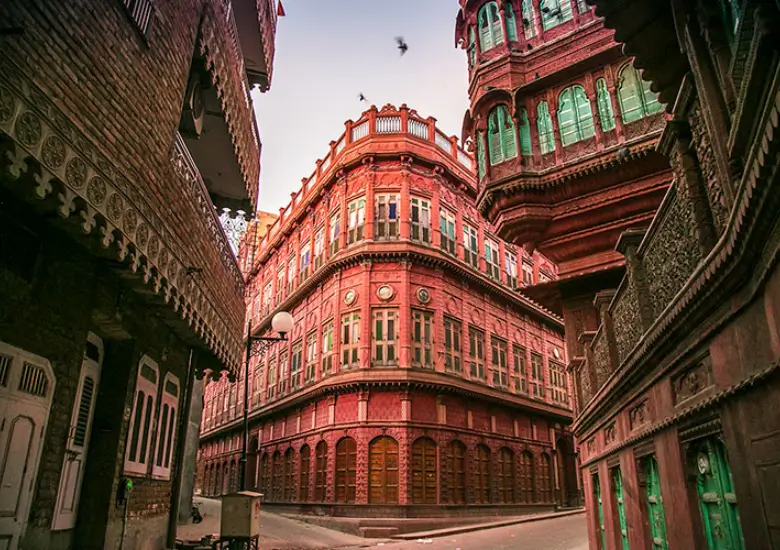
Rampuria Havelis are among the finest examples of merchant architecture in Rajasthan and are widely regarded as the architectural jewels of Bikaner. Built during the fifteenth and sixteenth centuries by the wealthy Rampuria merchant family, this remarkable collection of mansions is famous for its intricately carved red sandstone façades, ornate balconies and beautifully decorated entrances. Every haveli reflects the prosperity of Bikaner's trading community during the height of the Silk Route and desert caravan trade.
The elaborate carvings display exceptional craftsmanship, featuring floral patterns, geometric designs, decorative jharokhas and finely sculpted windows that continue to impress architects and photographers alike. Although many of the havelis remain privately owned, their magnificent exteriors can be admired while walking through the historic streets of the old city. The area provides an excellent opportunity to appreciate the artistic traditions that made Bikaner one of Rajasthan's wealthiest trading centres.
For visitors interested in heritage architecture, photography and local history, Rampuria Havelis remain one of the city's most rewarding attractions and an essential stop while exploring old Bikaner.
Bhandasar Jain Temple
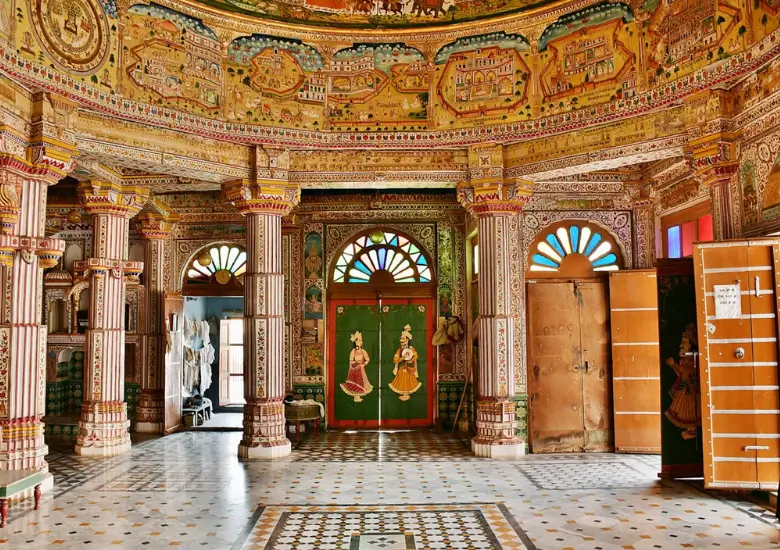
Bhandasar Jain Temple is one of Bikaner's most beautiful religious monuments and an outstanding example of fifteenth-century Jain architecture. Dedicated to the fifth Jain Tirthankara, Sumatinath, the temple was built by the wealthy merchant Bhandasa Oswal and is admired for its richly decorated interiors, colourful frescoes and delicate mirror work. According to local tradition, clarified butter (ghee) was mixed into the mortar during its construction, adding to the temple's unique historical significance.
Visitors entering the temple are greeted by beautifully painted ceilings, intricately carved pillars and detailed wall paintings depicting scenes from Jain philosophy and mythology. The craftsmanship displayed throughout the temple reflects the artistic excellence of Rajasthan's medieval artisans and remains remarkably well preserved.
The peaceful surroundings and spiritual atmosphere make Bhandasar Jain Temple an important cultural and religious landmark within Bikaner.
Opening Hours: Daily, approximately 5:00 AM – 1:00 PM and 5:00 PM – 10:00 PM.
Gajner Palace & Gajner Wildlife Sanctuary
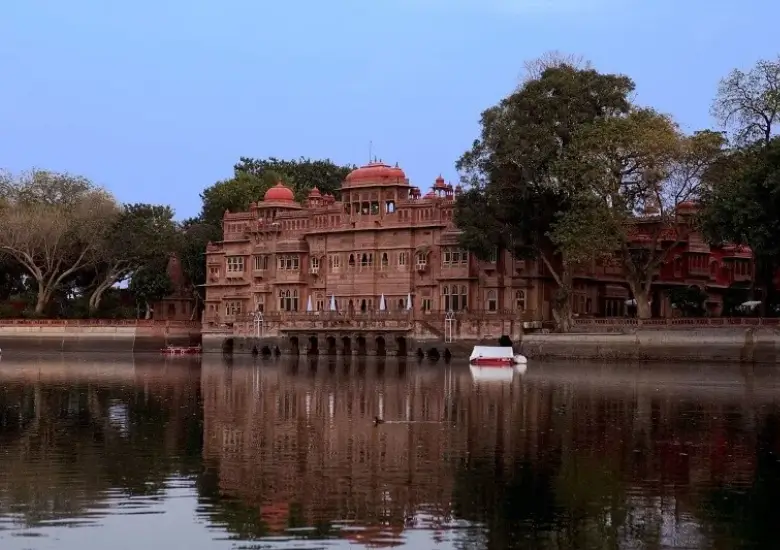
Located around 30 kilometres from Bikaner, Gajner Palace is a magnificent lakeside retreat built by Maharaja Ganga Singh as a royal hunting residence. Surrounded by forests and overlooking the tranquil waters of Gajner Lake, the palace combines elegant Rajput architecture with peaceful natural surroundings. Today, the beautifully restored property operates as a heritage hotel while continuing to preserve its royal character.
Adjacent to the palace lies the Gajner Wildlife Sanctuary, home to blackbuck, chinkara, nilgai, wild boar, desert foxes and numerous migratory bird species. Nature walks, birdwatching and leisurely drives through the sanctuary provide visitors with an opportunity to experience the wildlife of Rajasthan beyond its famous tiger reserves.
The combination of royal architecture, lakeside scenery and natural beauty makes Gajner one of the most enjoyable day excursions from Bikaner.
Palace Visiting Hours: Accessible to hotel guests and restaurant visitors.
Wildlife Sanctuary: Generally open from Sunrise to Sunset.
Shiv Bari Temple
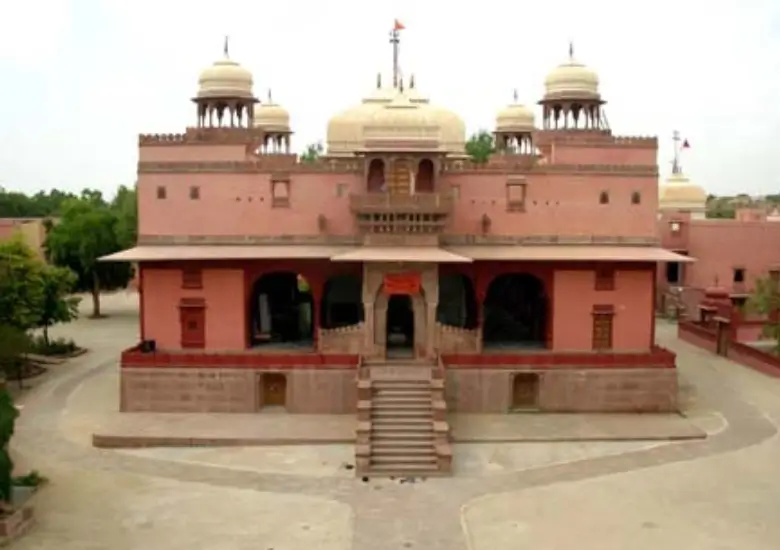
Shiv Bari Temple is one of Bikaner's most important Hindu temples and was built in the nineteenth century by Maharaja Dungar Singh in honour of his father, Maharaja Lal Singh. Dedicated to Lord Shiva, the temple is constructed from striking red sandstone and white marble, featuring graceful domes, beautifully carved pillars and an impressive silver Nandi statue positioned before the sanctum.
The temple complex also includes a small water reservoir and landscaped gardens that contribute to its peaceful atmosphere. Daily prayers and religious ceremonies continue to attract devotees throughout the year, while visitors appreciate the elegant architecture and serene surroundings.
Located just outside the city centre, Shiv Bari Temple provides a quieter spiritual experience compared to Bikaner's busier attractions and remains a respected place of worship for the local community.
Opening Hours: Daily, approximately 6:00 AM – 8:00 PM.
Bikaner Camel Festival
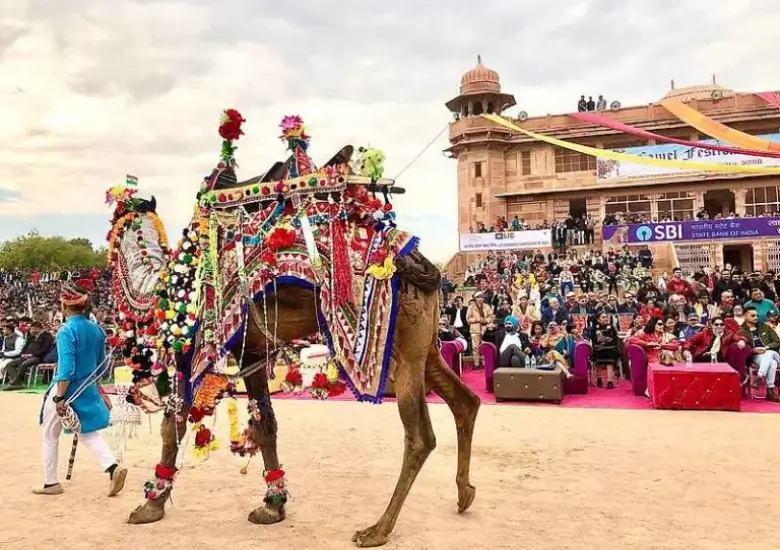
The Bikaner Camel Festival is one of Rajasthan's most distinctive cultural celebrations, honouring the camel's historic role in the life and economy of the Thar Desert. Organised each year by the Rajasthan Tourism Department, the festival usually takes place in January and attracts visitors from across India and around the world. The event transforms Bikaner into a vibrant showcase of desert traditions, folk performances and colourful celebrations.
Visitors can enjoy beautifully decorated camel processions, camel races, camel dancing performances, traditional music, Kalbelia folk dances, puppet shows, handicraft exhibitions and local food stalls. Competitions featuring the best-decorated camels, traditional Rajasthani attire and cultural performances create a lively atmosphere that reflects the unique heritage of western Rajasthan. The evening programmes often conclude with spectacular folk performances and fireworks.
For travellers visiting Rajasthan during the winter season, the Bikaner Camel Festival offers an excellent opportunity to experience the region's living traditions while learning about the cultural importance of camels in desert communities.
Best Time: Usually held over two days in January. Dates vary each year.
Shopping in Bikaner
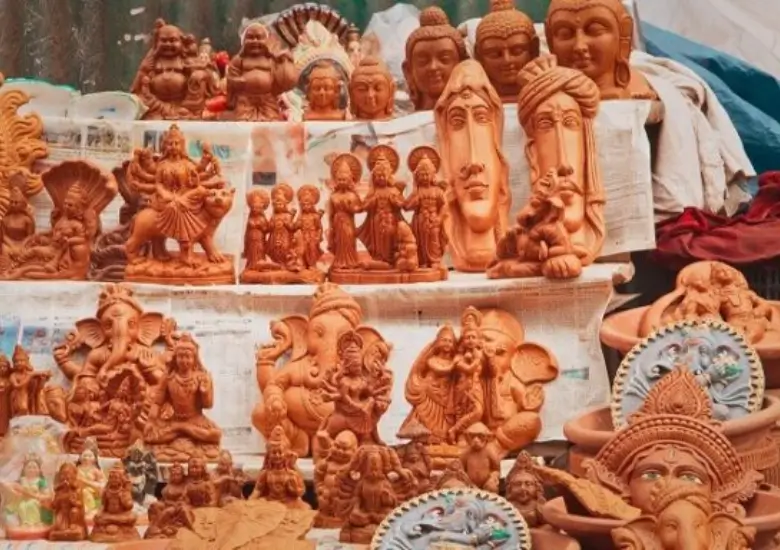
Bikaner has long been recognised for its skilled artisans and traditional handicrafts, making it one of Rajasthan's most rewarding shopping destinations. The city's historic markets offer an excellent selection of camel leather products, embroidered textiles, lacquer work, miniature paintings, handcrafted wooden items, silver jewellery and decorative souvenirs created by local craftsmen.
Popular shopping areas include Kote Gate Market, Station Road Market, Mahatma Gandhi Road, King Edward Memorial Road and the streets surrounding Junagarh Fort. Visitors can browse colourful Bandhani fabrics, traditional Mojari footwear, brassware, handwoven carpets, pottery and beautifully crafted home décor inspired by Rajasthan's royal heritage.
No visit to Bikaner is complete without purchasing the city's famous Bikaneri Bhujia, a savoury snack that has earned international recognition. Traditional sweet shops also offer local favourites such as Rasgulla, Gond Pak and a variety of authentic Rajasthani sweets that have been prepared here for generations.
Traditional Bikaneri Cuisine
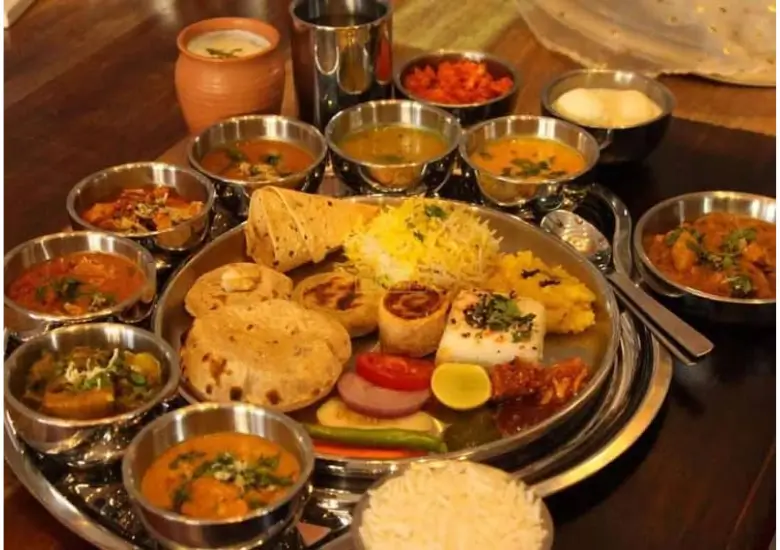
Bikaner's culinary heritage reflects the flavours of Rajasthan's desert region, where recipes evolved using locally available ingredients and time-honoured cooking techniques. Traditional Marwari dishes continue to be served in family-run restaurants, heritage hotels and local eateries, providing visitors with an authentic introduction to the region's rich food culture.
Among the city's best-known specialities are Bikaneri Bhujia, Dal Baati Churma, Gatte Ki Sabzi, Ker Sangri, Bajra Roti, Panchmel Dal and Papad Ki Sabzi. Popular snacks include Kachori, Samosa and Mirchi Vada, while desserts such as Bikaneri Rasgulla, Ghewar and Mawa-based sweets remain favourites among both residents and visitors.
Dining in Bikaner offers an opportunity to experience the authentic flavours of the Marwar region while enjoying the warm hospitality for which Rajasthan is renowned.
Luxury Heritage Hotels in Bikaner
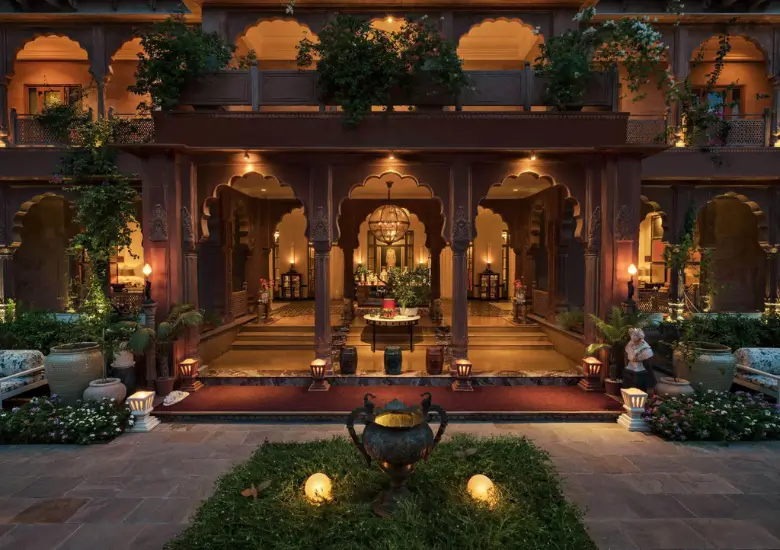
Bikaner offers an excellent selection of heritage hotels where former royal residences and noble mansions have been carefully restored into elegant accommodations. These properties preserve the city's architectural heritage while providing modern comforts, refined hospitality and personalised service. Staying in a heritage hotel allows visitors to experience the royal traditions of Bikaner in an authentic setting.
Among the city's most distinguished luxury properties are Narendra Bhawan Bikaner, a beautifully restored royal residence celebrated for its unique design; Lallgarh Palace Hotel, offering a regal atmosphere within one of Bikaner's most famous palaces; Gajner Palace Hotel, overlooking the tranquil Gajner Lake; Bhanwar Niwas, a heritage mansion known for its traditional hospitality; and The Laxmi Niwas Palace, an architectural masterpiece built for Maharaja Ganga Singh and now one of Rajasthan's finest palace hotels.
Elegant suites, landscaped gardens, traditional architecture, fine dining and attentive service make these heritage properties an excellent choice for travellers seeking a memorable royal stay in Bikaner.
Best Time to Visit Bikaner
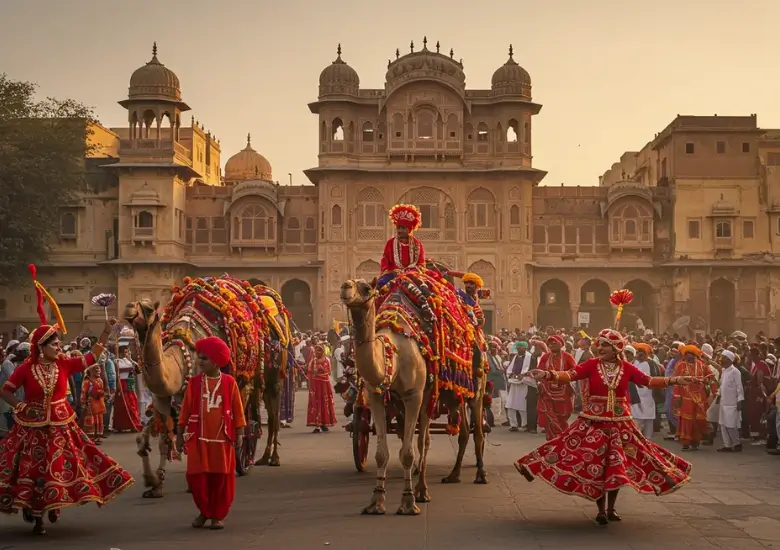
Bikaner can be visited throughout the year, although the most comfortable season for sightseeing is between October and March, when the weather remains pleasant for exploring forts, palaces, temples and historic markets. Mild temperatures also make this the ideal time for excursions to Gajner Palace, the Camel Research Centre and nearby desert landscapes.
The summer season (April to June) is generally hot, with daytime temperatures frequently exceeding 40°C. Visitors travelling during this period usually begin sightseeing early in the morning before relaxing in museums, heritage hotels or indoor attractions during the hottest part of the day.
The monsoon season (July to September) brings limited rainfall, but occasional showers provide welcome relief from the summer heat and add freshness to the city's gardens and surrounding countryside. Although rainfall is relatively light, this period offers a quieter travel experience with fewer visitors.
Tell Us About
Your Vision for India
Share your travel aspirations, and our dedicated destination specialists will curate a bespoke itinerary - thoughtfully designed around your preferences, complete with handpicked recommendations and transparent pricing. Every inquiry is treated with the discretion and attention it deserves, with a detailed response delivered within 24 hours, entirely without obligation.
Where Your India Story Begins
Every remarkable journey through India begins with a conversation. Connect with our specialists today, and allow us to transform your vision into a seamlessly curated, once-in-a-lifetime experience.